
Published
January 7, 2026
No Comments
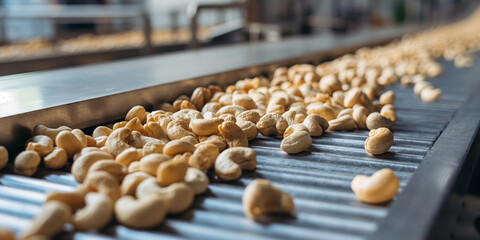
Cashew Processing Factory.
The finance minister announced that through the Accelerated Export Development initiative, two cashew processing plants will be built in the two Bono regions, and will be funded by the Ghana EXIM Bank.
This is commendable because it will enhance the value addition of cashew and create jobs for the youth in the regions. In the last decade, the volumes recorded by Statista shows that 95% of unprocessed cashew were exported. Traders believe that they make returns faster when they sell the raw products.
The real problem is not the absence of processing plants. As a country, we have not fully utilised the wide ranges of products to extract beyond nuts, nor have we identified viable markets for the by-product. It is worth noting that for each 100-tonnes of Raw Cashew Nuts (RCN) processed, only 22-tonnes comes out as commercial nuts, and we fail to find viable use for the remaining by-product.
Two cashew processing factories, MIM Cashew Ltd. and Usibras Ghana, announced plans to relocate their operations to Ivory Coast due to low supply of cashew. Usibras Ghana Ltd. has an annual production capacity of about 35,000MT, but they secured only 7,000MT in 2024.
A young entrepreneur in the cashew business raised concerns about her inability to expand because she’s “unable to compete with exporters of raw cashew.” Ghana risks losing about 700 direct and indirect jobs when these factories relocate to neighboring countries.
We ask whether or not the government should directly own a cashew processing plant, or provide an enabling environment for the private sector to lead and achieve similar goals?
The history of state-owned agro-processing models such as Pwalugu and Wenchi tomato companies, and Komenda sugar factory collapsed due to raw materials shortfall and operational losses. However, countries such as Vietnam and Brazil, the largest exporters of cashew in the world, have succeeded in adding value because it is private sector-led.
It is laudable that the government is interested in getting involved in processing cashew; however, it is best if they act as enablers, rather than acting as operators in a space where the private sector performs better.
Recommendation
We suggest that the state protects cashew processing companies by:
- Providing incentives – tax breaks, duty free on imported equipment etc., for existing companies;
- The Tree Crops Authority should ensure value is added to cashew before export, and link businesses to international markets;
- Government should rather provide low-interest loans to indigenous processors through the Ghana EXIM Bank; and
- Take measures to attract investment in the Tree Crop sector to safeguard employment for the youth.